Pagalba
 Kontaktai
 Atsiliepimai
 Verslui
 Varlė
Varlė


Krepšelis tuščias
Turite Varlės paskyrą?
Prisijunkite, kad pamatytumėte krepšelio turinį
Prisijungti

 Visos prekės


 Krepšelis
Tuščias
Prekių
Krepšelis
Krepšelis
Tuščias
Prekių
Krepšelis
Prisijunkite, kad pamatytumėte krepšelio turinį
Prisijungti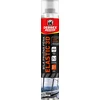
 4.5
4.5


 4.5
4.5
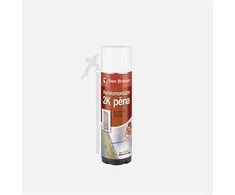
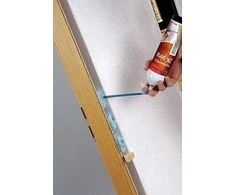
Top protection for modern buildings Elastic 3D flexible foam represents the pinnacle of assembly foam technology. Thanks to its unique advanced formulation, this foam remains extremely elastic even after curing, which is crucial for the durability of joints in timber-framed, low-energy (NED) and passive houses. While conventional foams buckle and crack due to building movements and temperature changes, Elastic 3D adapts to the movements of the structure and eliminates thermal bridging in the long term. Maximum insulation without compromise This product stands out for its dense structure and excellent sound insulation. It is designed to seal against both air and water, while maintaining permeability to water vapour. Its extremely low water absorption and permanent flexibility make it the ideal choice for window, door, shopfront or gate installations. In combination with window strips, it achieves the maximum efficiency required for passive standards. Versatility and speed of application Elastic 3D foam sets very quickly and adheres well to most building materials such as concrete, stone, masonry, wood, plastic or polystyrene. It is invaluable for solving expansion joints or eliminating thermal bridges in attic ceilings when connected to the perimeter masonry. Main advantages: Extreme permanent flexibility: resists cracking during building movements and thermal expansion. High noise attenuation: Superior sound insulation for a quiet interior. Low water absorption: closed structure prevents moisture penetration. Shape stability: Eliminates thermal bridging in critical details. Suitable for timber buildings, log cabins, cottages and passive houses. Specifications: Type of application. Colour: White (for easy identification of premium material) Temperature resistance: -40 °C to +90 °C Suitable substrates: concrete, masonry, stone, wood, plastic, polystyrene. What to watch out for: The foam is not UV-resistant, so it must be covered after curing (with lath, putty, plaster). It does not adhere to materials such as PE, PP, Teflon or silicone. When working in low temperatures, we recommend that the box is pre-tempered at room temperature.
 3-6 d. d.


 3-7 d. d.
 3-6 d. d.
 3-6 d. d.
 3-6 d. d.
 3-6 d. d.
 1-2 d. d.
 5.0
1-2 d. d.
5.0
1-2 d. d.
 6-9 d. d.
 4-5 d. d.
 4-6 d. d.


 Išpardavimas
 Žemos kainos garantija
5.0
0-1 d. d.
Žemos kainos garantija
5.0
0-1 d. d.

 9-12 d. d.


 LP EXPRESS paštomate spalio 14 d.
 Omniva paštomate spalio 14 d.
 Pristatymas Venipak kurjeriu spalio 14 d.
 DPD kurjeriu spalio 14 d.